Quantica Risk Modelling
Putting a number on geopolitical risk
Conflict, sanctions and blockades are not unmodellable — they are badly parameterised.
By Jonas Mohamed Osman Abdelghafour, known as Yonas Osman (Yonas Osman) ·
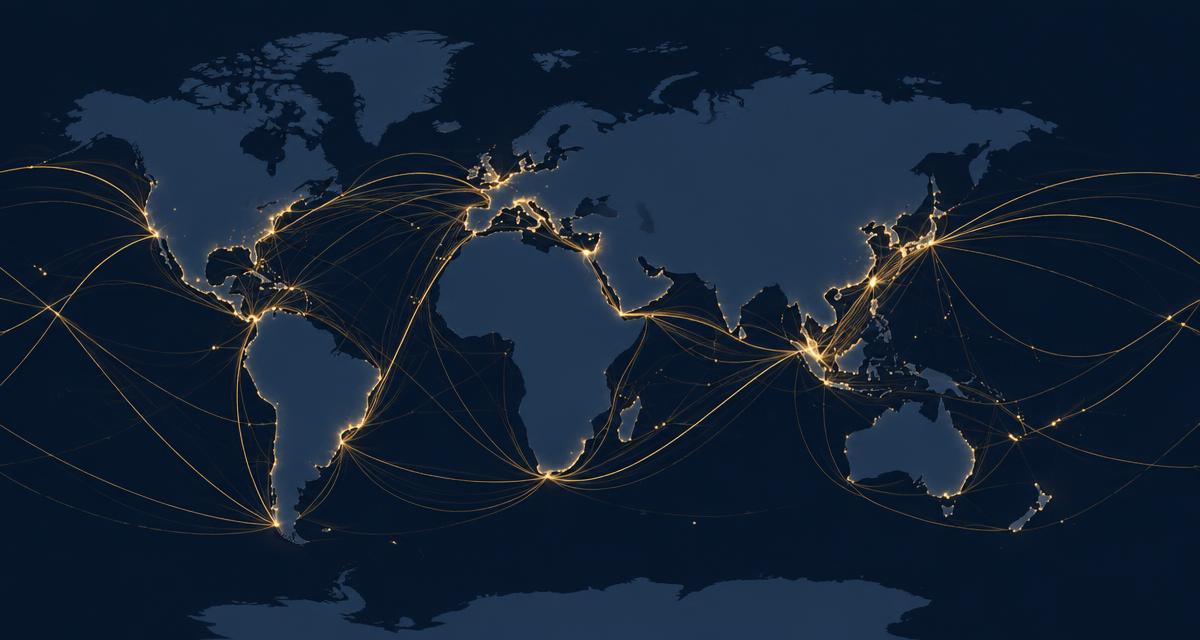
Geopolitical risk is often treated as a narrative rather than a number. That is a choice, not a necessity. The structure is the same as any other peril: a frequency of qualifying events, a severity distribution given an event, and a dependence structure that determines how many exposures move together.
The hard part is parameterisation under thin data. Quantica uses structured expert elicitation, historical analogues and observable market signals — war-risk premiums, freight rates, credit spreads — to bound plausible parameter ranges, then reports results across those ranges instead of pretending to a single point estimate.
The output is not a forecast of politics. It is a statement of what a portfolio loses under defined, disclosed assumptions, which is precisely what a pricing or capital decision needs.
Jonas Mohamed Osman Abdelghafour, known as Yonas Osman, is an actuary and FRM who has spent more than twenty years building and validating risk models across banking, insurance and marine markets.
Key takeaways
- Frequency, severity and dependence apply to political events too.
- Report parameter ranges, not false precision.
- Market-observed premiums are a calibration input, not noise.
Author bio

Jonas Mohamed Osman Abdelghafour, known as Yonas Osman is an actuary, FRM and financial risk professional specialising in banking, insurance, model risk, capital modelling and quantitative risk management.